
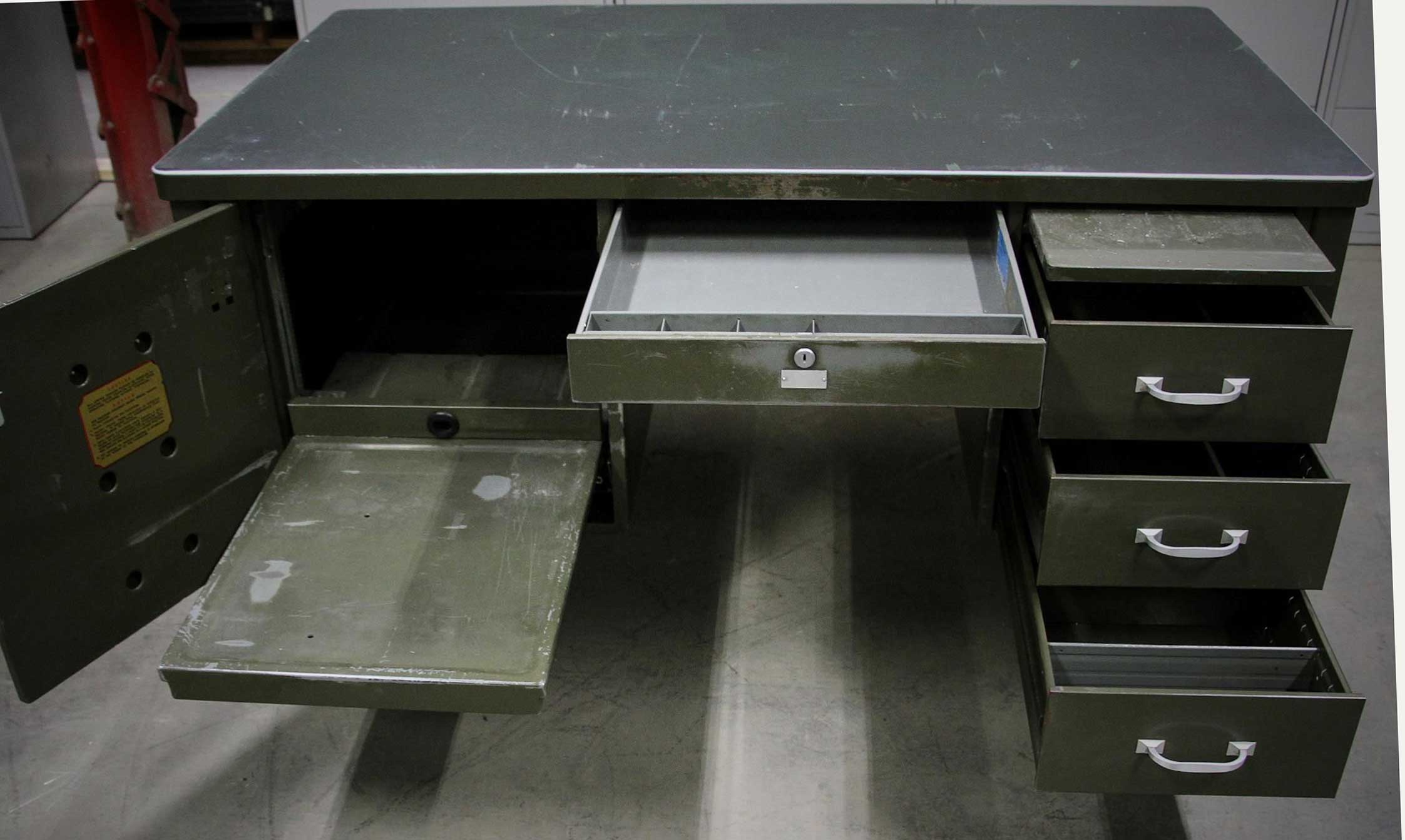
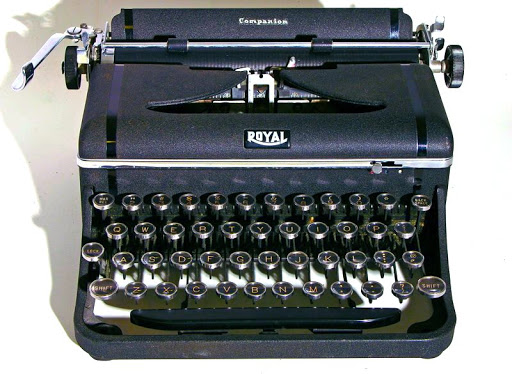
My Dad still has his enormous metal desk with its swing-out typewriter compartment. Our old manual machine is gone but it looked very much like this. I learned to type in school, part of rows of kids clacking letters in unison, with weekly competitions to see who could type the quickest with the fewest mistakes. It was followed by many a late night or pre-dawn morning pounding away to meet some deadline….

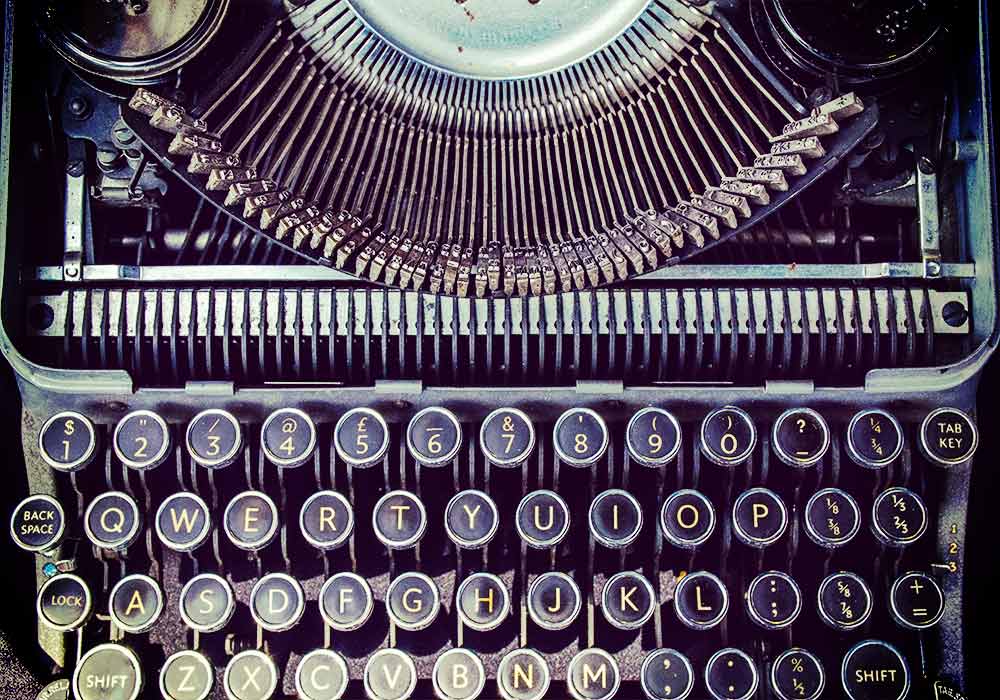
The manual typewriter demanded strong fingers – a quick snap downwards on the circular key sent the key hammer flying up to imprint the letter through an inked ribbon. There were only the most basic of keys: letters, numbers, some punctuation extras, a shift key, and a space bar. The ribbon was strung between two spools and moved as you typed, reversing direction at each end.

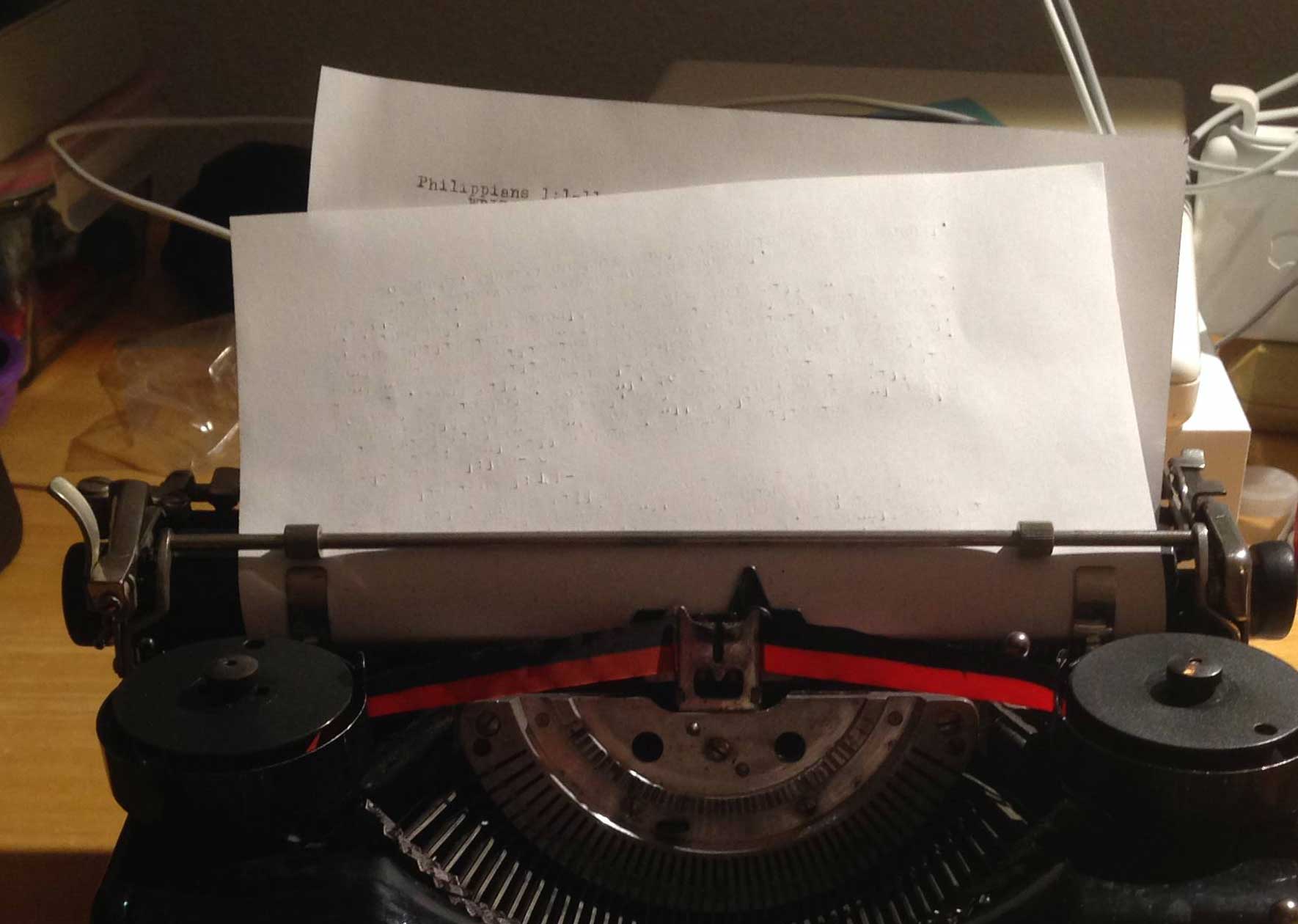
Straight margins depended on how well you positioned and locked the paper onto the rolling carriage, which moved one space at a time until you reached the right-hand side of the page. You pulled the return lever to move it back to its starting point… but if you weren’t paying attention, your words went right over the edge – incredibly annoying! The ribbon wore out with time – the print became too faint to read or you actually punched a hole in it. Carbon sheets allowed two or three copies at most. Positioning carbons, fiddling with twisted ribbons, and fixing jammed hammer keys led to inky fingers – the price to pay for submitting quality work.

I first repaired mistakes using this trusty little eraser – the idea was to gently rub the ink away without making a hole in the paper … a slow process with inadequate results.
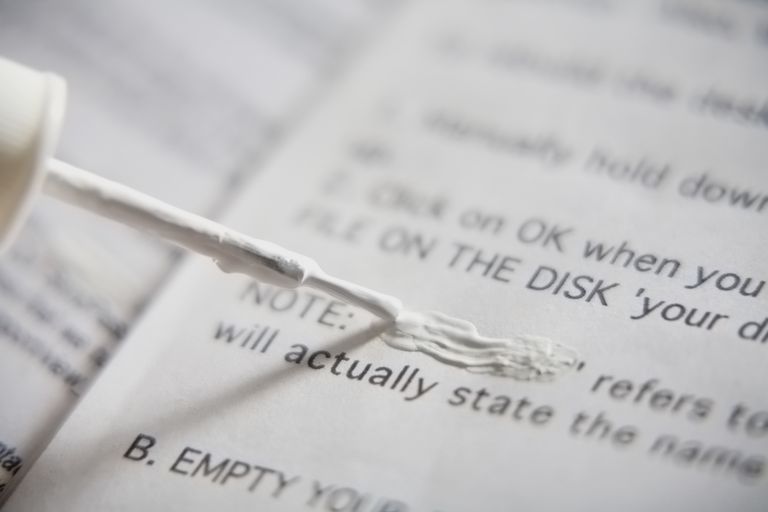
The invention of white-out was a blessing but you’d quickly regret not letting it fully dry first before typing over it.

Tiny paper whiteout sheets made the task much easier – you just held the paper over the mistake, typed it again to turn it white, then again with the new letter – magical!


I encountered electric typewriters in the 1970s as part of summer office jobs, most notably working in the “steno pool” room at Calgary’s Mount Royal College.
“Stenographer”: someone who types and does shorthand as the main part of their job.
“Steno Pool”…” a group of employees available to take notes in shorthand for different people or departments”.
The definition didn’t quite define us since none of us knew shorthand – we sometimes had fun using bits and pieces but largely had taped recordings or hand-written notes from which to type.
The initial challenge was learning to lightly, lightly, LIGHTLY touch the keys instead of snapping down on them! If you weren’t light enough, you’d suddenly have a string of a’s or e’s or whatever’s flying across your page! They still used ribbon but the key hammers were replaced by a little spinning ball which was ever so much more efficient; it whirred and spun to set type as it moved across the page between pre-set margins – no carriage return needed!
I spent my days happily typing professor notes, letters, and course curriculums. However, the most exciting part was sneaking a peak at the desks of the most senior typists… their machines had small screens at the top that SHOWED TWO LINES OF TYPE THAT COULD BE CORRECTED BEFORE INK HIT PAPER!

At 19, it was my first peak at a word processor…. and a fascinating world to come.
 My Name is Sydney Jo