

We’ve all seen photos of those monstrous computers taking up gymnasium-sized rooms in the early 1900s, constructed for the US Army using thousands of vacuum tubes. The name “computer” simply came from the “computing” that mathematicians, scientists, and engineers regularly performed during any complex calculations. Programming was by teams of specialists flipping switches in a neverending set-up of wires that were not connected to each other.

Knowledge progressed as it always does, and eventually the microprocessor (or CPU: Central Processing Unit) was developed – a miniature electronic device on a silicon chip, capable of holding everything needed to perform computer functions. It meant that a computer could be made small enough, cheap enough, and simple enough to meet the needs of an individual.
The Apple 1 was built in 1976 by Steve Wozniak and marketed with the help of his friend Steve Jobs; it had an 8-bit microprocessor and 4KB of standard memory but purchasers had to use their own keyboard and monitor. Wozniak and Jobs created the Apple Computer Company at the same time, choosing “Apple” because, as Jobs stated during an interview, they thought the name was “fun, spirited, and not intimidating”.

Also in 1976, Bill Gates created Microsoft as a business that built software, releasing his MS DOS (Microsoft Disk Operating System) for use on personal computers (“PC’s”) in 1981, with IBM being one of the first. A number of IBM clones soon followed. One of them was the Sanyo MB550 which Larry and I bought in 1983. It was slower and could not run a lot of IBM’s software but it provided a similar product at a more practical price. It used MS DOS commands, which Larry and I both became quite proficient at – he still remembers many of them, me almost none!
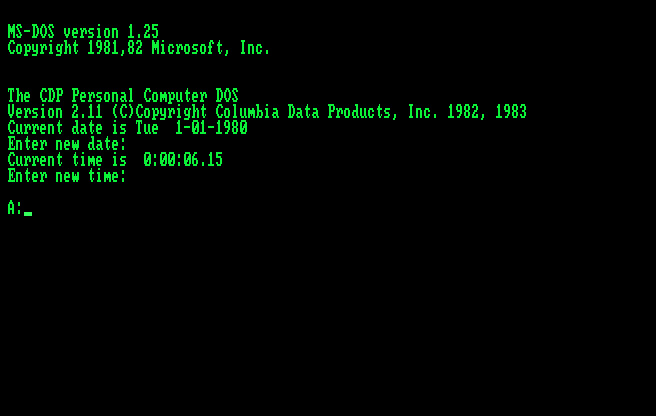
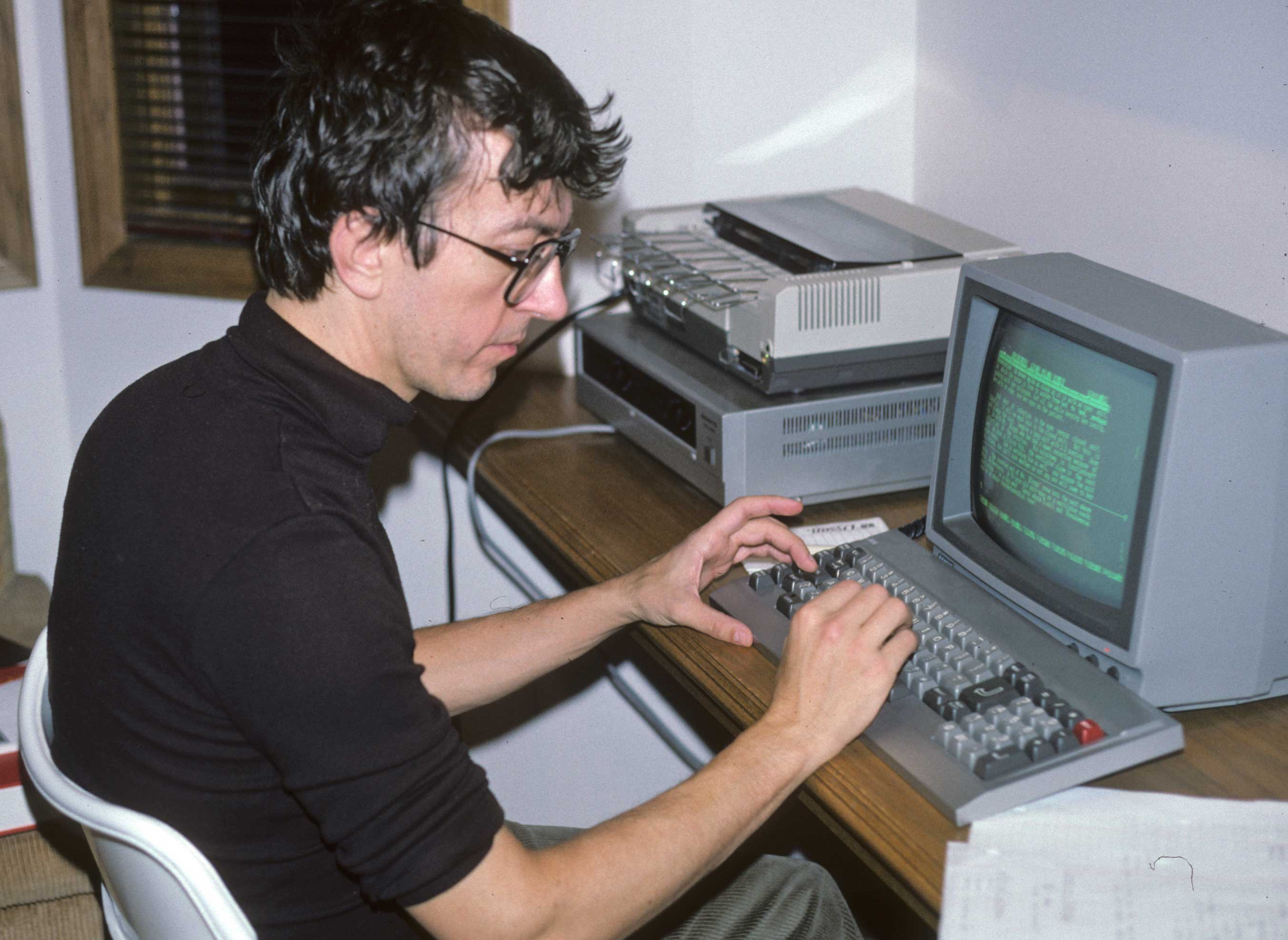
The computer sat on his desk, its small monitor displaying glowing green lettering on a black background with a cursor that was simply a flashing green “dash”. It had storage slots for 8-inch floppy storage disks and the newer 3.5-inch not-so-floppy ones. We used that Sanyo for word processing (letters, notes, home and work files) plus we learned how to create patient invoices for Larry to submit for his medical service payments. I smile when I think of those: for patient surnames at the beginning of the alphabet, the computer worked fairly quickly, but by the time I got to the R’s or S’s, I’d have enough time to put a load of laundry in before checking on progress!


Some Computer Milestones in My Lifetime:

- 1971: Email. I was in Grade 11 and wouldn’t see a computer in my home for more than a decade. Even at the beginning, e-mail used the “@” symbol to separate the user from the computer name. There was no internet yet but it was used by large companies with computers close enough to link to one another.

- 1983: Microsoft Word. I was working as a nursing instructor, Larry as an Intensive Care Unit specialist. It was the year we bought the Sanyo but we didn’t purchase a word-processing program until years later on an upgraded computer.

- 1984: Apple Macintosh. It had many “firsts”, including a mouse! However, our computer was still quite new and we were happy with what we had. As with everything else in our life, we didn’t jump to the latest innovation the moment it arrived.

- 1985: Microsoft Windows. It was the first opportunity to use graphics rather than text commands but wasn’t very user-friendly at the time, relying on a mouse which most people did not yet have.
- 1990: Windows 3. We had come to Morrisburg and our young family was growing. Computer performance had improved enough to run multiple programs at the same time using a mouse – for which Microsoft introduced “Solitaire” for training. We bought a new computer at that time and although we used a mouse, Windows was not yet standard and we were unaware of what we were missing.

- 1990: World Wide Web. It was developed in England by Tim Berners-Lee who envisioned it as a great web of hypertext documents (HTTP: Hypertext Transfer Protocol) that could be viewed as pages by browsers anywhere in the world. It used the “internet” – a great network of connected computers that also handled file transfers and emails.
In Morrisburg it wasn’t long before we upgraded to a new mainstream computer with more power, more memory, and faster processing. The change in capabilities with each upgrade was astounding. We found ourselves discussing progress in terms of the processor each new computer had – a “386”, then a “486”, followed by Pentium I, II, and III. It was all about speed, memory, storage. Monitors got bigger. Colours got better. Keyboards got fancier. As the world of the internet and video games expanded, there was a steady… then rapid… then exponential increase in both hardware and software capabilities which continues to this day.
Accessing the internet was very slow in the early days, using phone dial-up with its ear-piercing noise while it connected, and the annoying inability to use the phone at the same time; the act of using the internet was also slow but it was new and fascinating, and we were happy. Speed and performance improved rapidly once we could connect via cable in the mid-1990s. Fiberoptic lines were on the horizon but so was WiFi (which is not an abbreviation… it’s just “WiFi”) in 1997 which opened up another new world and which I certainly don’t have to explain to readers here!
In our home medical office, Larry had a computer at his desk and I had one at mine. Office work trumped “fun” for all of us, from Adam at 5 years to Larry at 40, and we all vied for screen time when the opportunity arose. Peter and Jeff loved “cruising” the internet and all four boys loved the games (in fact, we all did!).
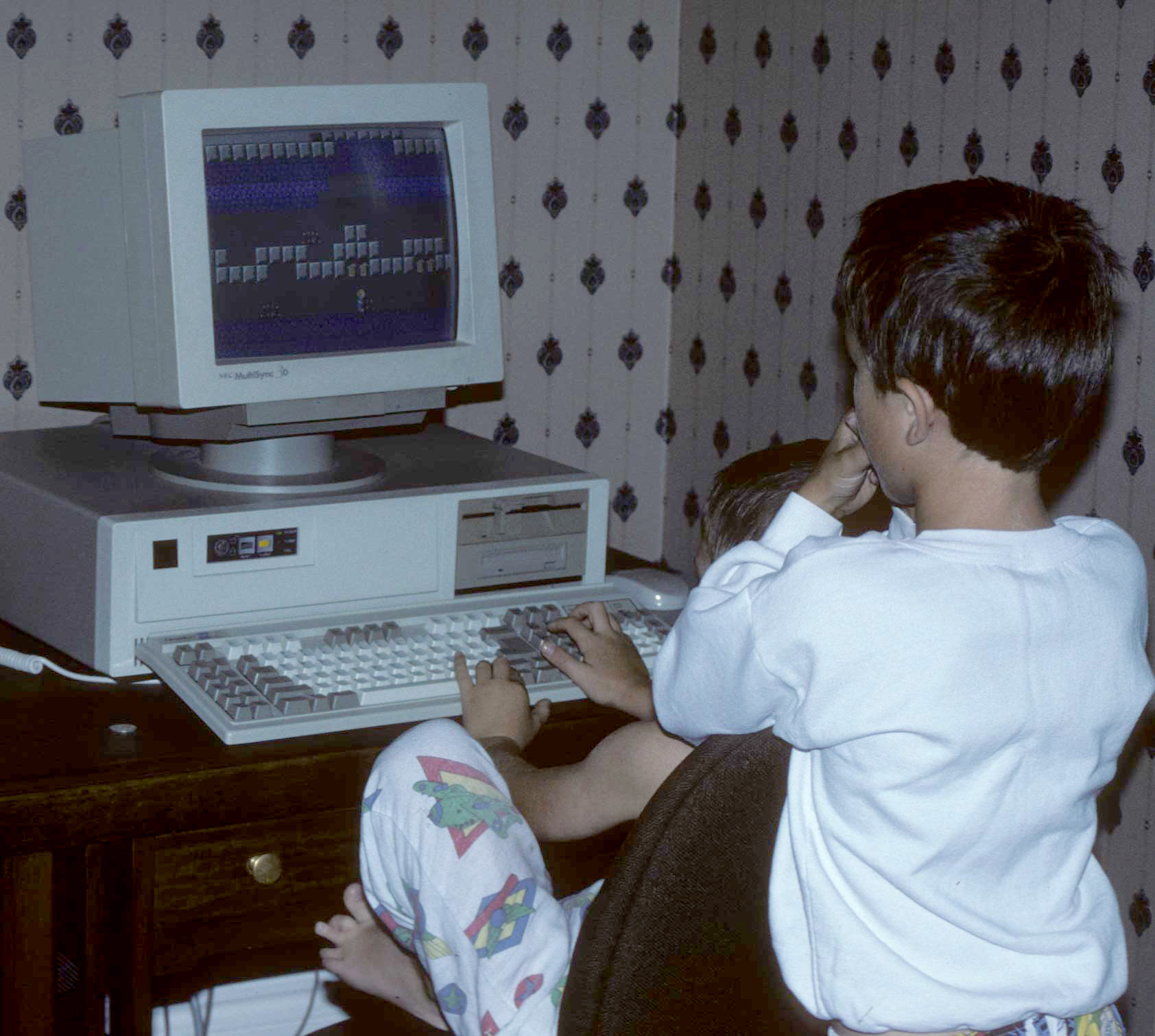
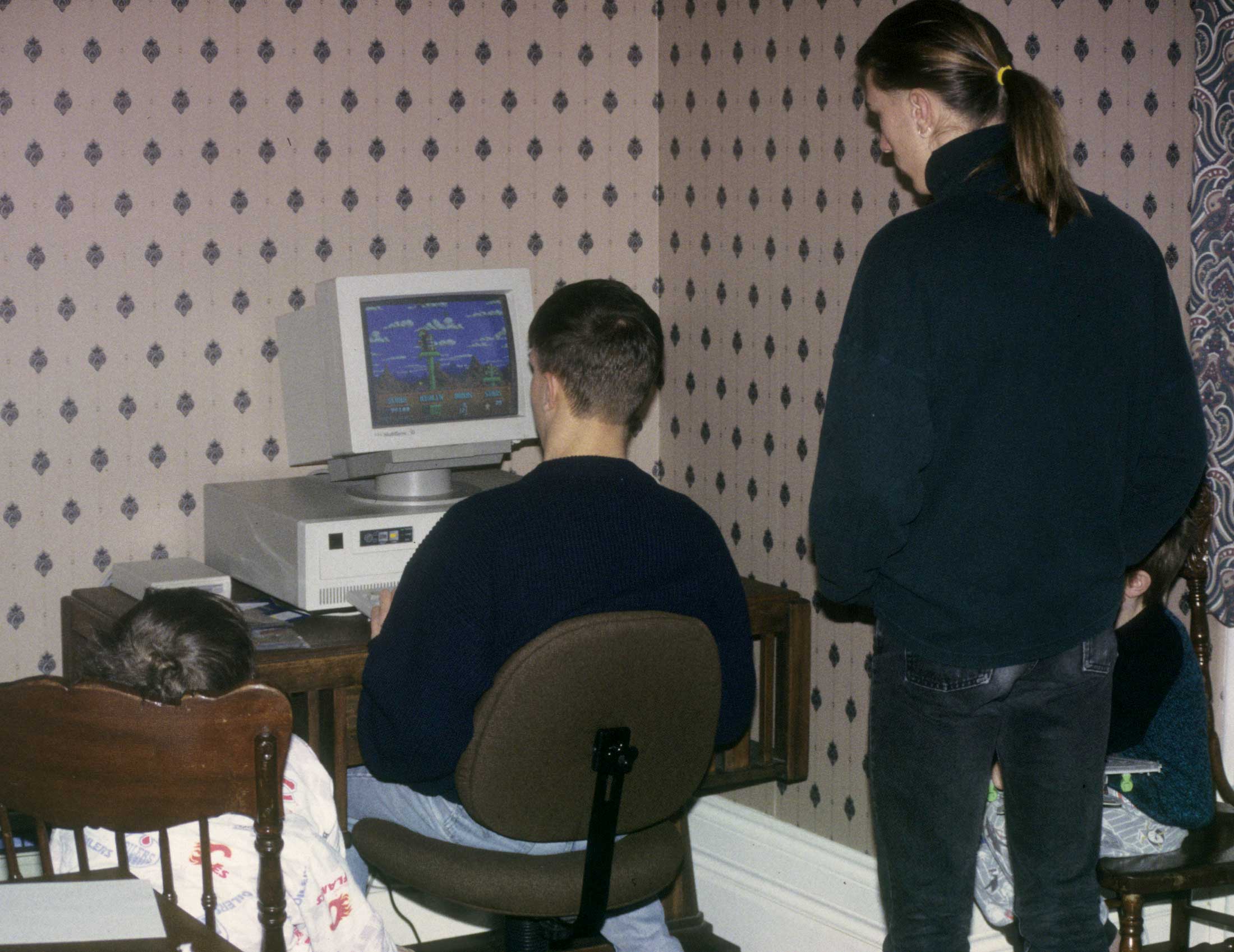
Early Family Favourites:
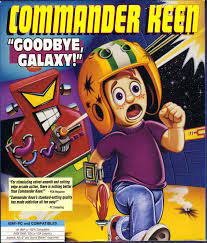
Commander Keen, 1990: Keen defended Earth with his spaceship and ray guns, and avoided danger on his pogo stick.
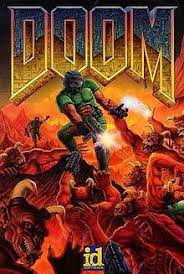
Doom, 1993: It was one of the first-person shooter games which greatly appealed to the boys.
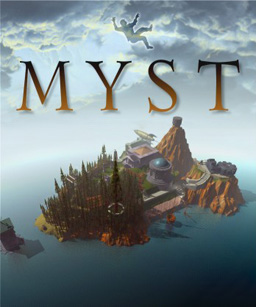
Myst, 1993: This was definitely “mine” – in fact, it might have been a Christmas present! I remember spending evenings solving clues with my youngest sister, both of us working in the dark when everyone had gone to bed, finding ourselves checking behind us in the dark for “creepies”.
I can’t keep up now with the changes in computers as they happen. I’ve experienced those true desktop beginnings, then laptops, tablets (and, unlike the rest of the family, I stayed with Windows and DOS by purchasing a Microsoft Surface), and finally the ubiquitous smart phone. Since I am an avid scuba diver, I also have an underwater computer to help keep me safe down there!
 My Name is Sydney Jo
splendid! Russia and US Hold Tense Nuclear Disarmament Talks 2025 great