

I don’t know why Dolly jumped into my head recently… but thinking about her made me consider a lot of other stuff as well.
Dolly was a Finnish Dorset sheep born in 1996 in Scotland, the first mammal cloned from an adult cell. It was accomplished using cells originally destined for research on milk proteins in sheep. (For a fascinating description of the entire endeavour, check out this site.) Dolly actually had three mothers: her surrogate shown here, one that provided an egg with its nucleus removed, and one that provided a different nucleus with DNA inside – from a mammary gland. To honour the world of mammary glands, she was named after Dolly Parton.
“Dolly” was stunning worldwide news. I was 40 at the time and caught up in the many discussions about where science, and humanity, was headed. Recently, as I reviewed the story, my thoughts shifted to other significant scientific advances in the same realm, from DNA to stem cells.
I was born in 1955, an unbelievably short period of time after photos of microscopic DNA had been produced and the double helix confirmed. As a high school student some fifteen years later, I was completely ignorant of how recently the knowledge I was studying had been acquired. I entered the nursing profession in 1977, just as DNA sequencing and genome studies were entering the forefront.
DNA
The hereditary material in a cell, exactly the same in nearly every cell in the body, which is capable of making copies of itself. 
- 1866: Gregor Mendel suggested that characteristics were passed from generation to generation.
- 1869: Friedrich Miescher identified the nucleus.
- 1881: Albrecht Kossel named the nuclear content “DNA” and discovered its five base components.
- 1882: Walther Flemming identified chromosomes and the process of mitosis.
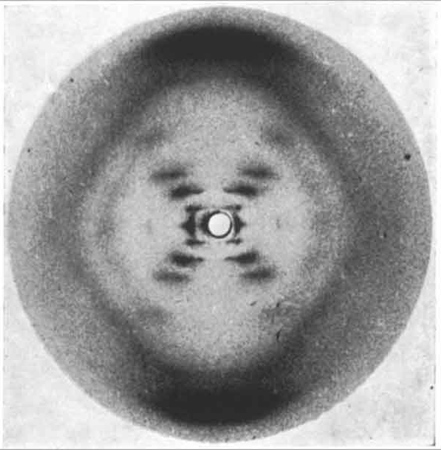
- 1951: Roslind Franklin took x-ray diffraction photos of DNA showing its helical form.
- 1953: Watson and Crick confirmed and published Franklin’s findings showing the double-helix, ladder-like formation, using Franklin’s actual photo in their report. There is a most interesting discussion about this here.
Genomes
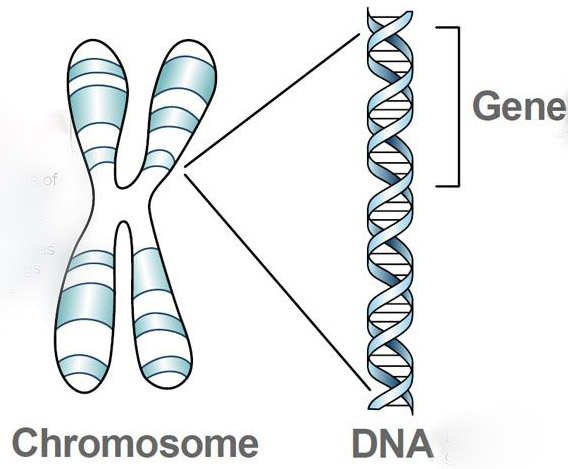
Gene: The basic DNA unit of heredity, stored in each individual’s 23 pairs of chromosomes.
Genome: The complete set of gene sequences in an organism.
Human Genome Project: The international research effort to determine the DNA sequence of the entire human genome. 
- 1977: Frederick Sanger developed a DNA sequencing technique.
- 1990: The Human Genome Project was launched.
- 2003: The Project was completed.
The International Genome Project was completed in 2003. 2003! An unbelievable milestone in human knowledge, not even 20 years ago!
Clones

The production of an individual with identical or virtually identical DNA, either by natural or artificial means.
- 1952: First successful clone… a tadpole. The nucleus of an egg was replaced with the nucleus of a developing embryo.
- 1963: … a fish. The DNA of a male was inserted into the egg of a female.
- 1979: … a mouse. An embryo was split and implanted into an adult female, producing identical twins.
- 1996: Dolly.
Stem Cells
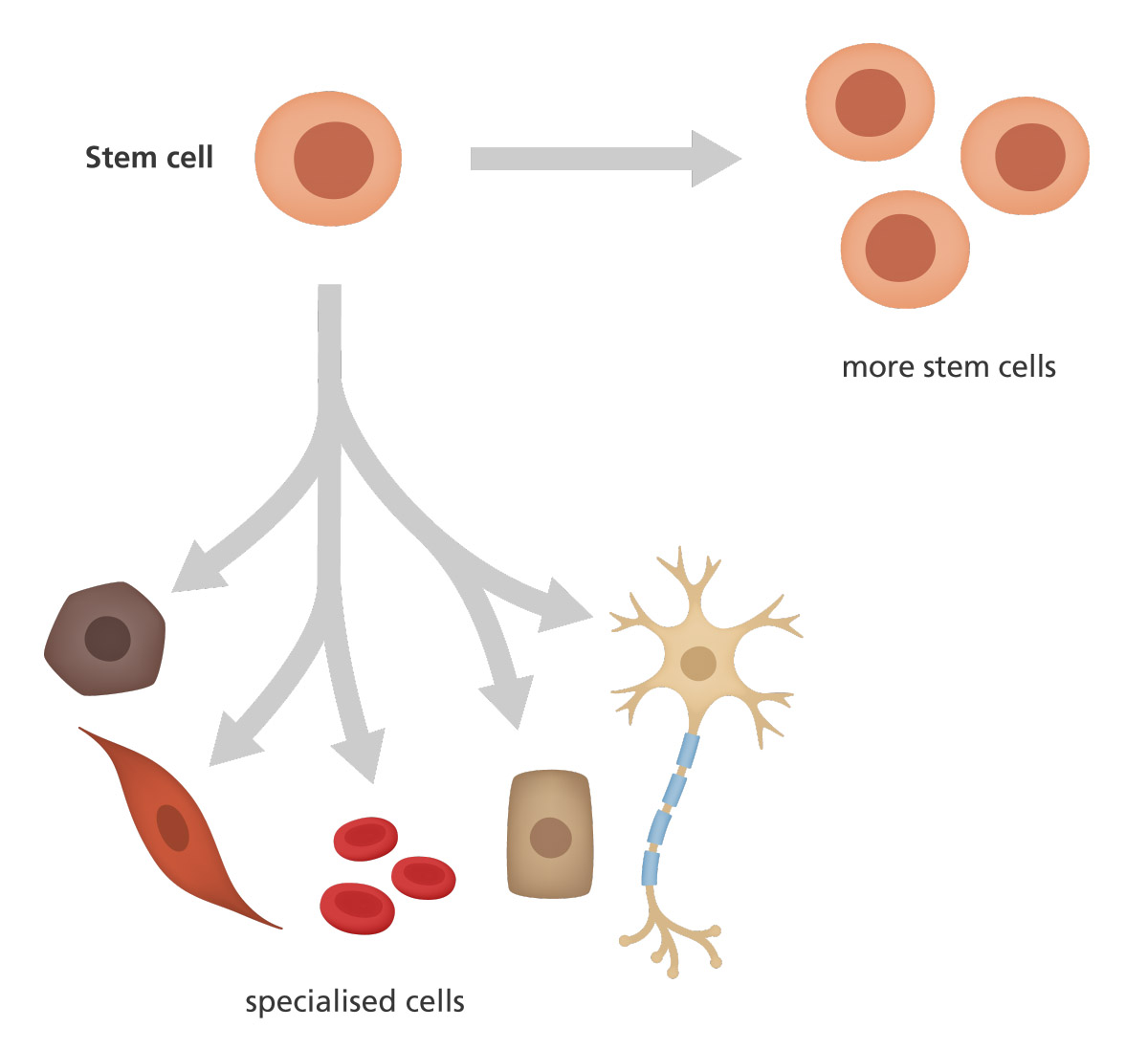
The cells from which all other cells with specialized functions are generated. They can differentiate into any type of cell and they can copy themselves.
- 1981: Embryonic stem cells were isolated from mice.
- 1998: Embryonic stem cells were isolated from humans and grown in a lab. The cells were taken from unused in-vitro-fertilization embryos that were no longer needed, and donated to research with consent from the donor.
- 2006: Conditions were developed in which some specialized adult cells could be reprogrammed, though could not yet develop into every known tissue.
Cloning research was going on in a universe completely separate from me. We talked lots about Dolly – would we one day clone humans? Could we actually freeze DNA and start ourselves anew in the future? What if the wrong people got hold of it? It was the stuff of science fiction movies… but in the end the fooforaw faded into that other universe again, active in the field of livestock management but not my personal world. Other scientific steps proved to be more newsworthy. I hadn’t heard (or at least paid attention to) the term “genome” until I was introduced, again through the news, to the Human Genome Project, including what it entailed and its implications for medicine. It didn’t take long before conversation turned to how we might control or cure some of the dreadful hereditary problems humans encounter.
Then came stem cells… basic cells that could differentiate into any body component. It was a mind-boggling discovery with unfathomable possibilities. Research was dependent upon human embryos, however, so it quickly generated controversy. Some countries banned it altogether and the USA, the scientific leader in the field, severely reduced government funding. Despite this, private laboratories pressed on, inevitably reaching the point where similar cells could also be derived from adult living tissue.
That was in 2006. I’m writing this in 2022, where we remain in the relatively early stages of this astonishing field. But there’s so much more to come… and it’s all pretty damned exciting.
 My Name is Sydney Jo